
The Case for Lower Middle-Market Private Credit as a Portfolio Diversifier
By: Brett Hickey, Star Mountain
The traditional stock-bond relationship has weakened in recent years, leaving investors without a reliable diversifier. Lower middle-market private credit offers a structurally sound alternative, with floating-rate income, low public market correlation and covenant protections that remain intact in this segment of the market.

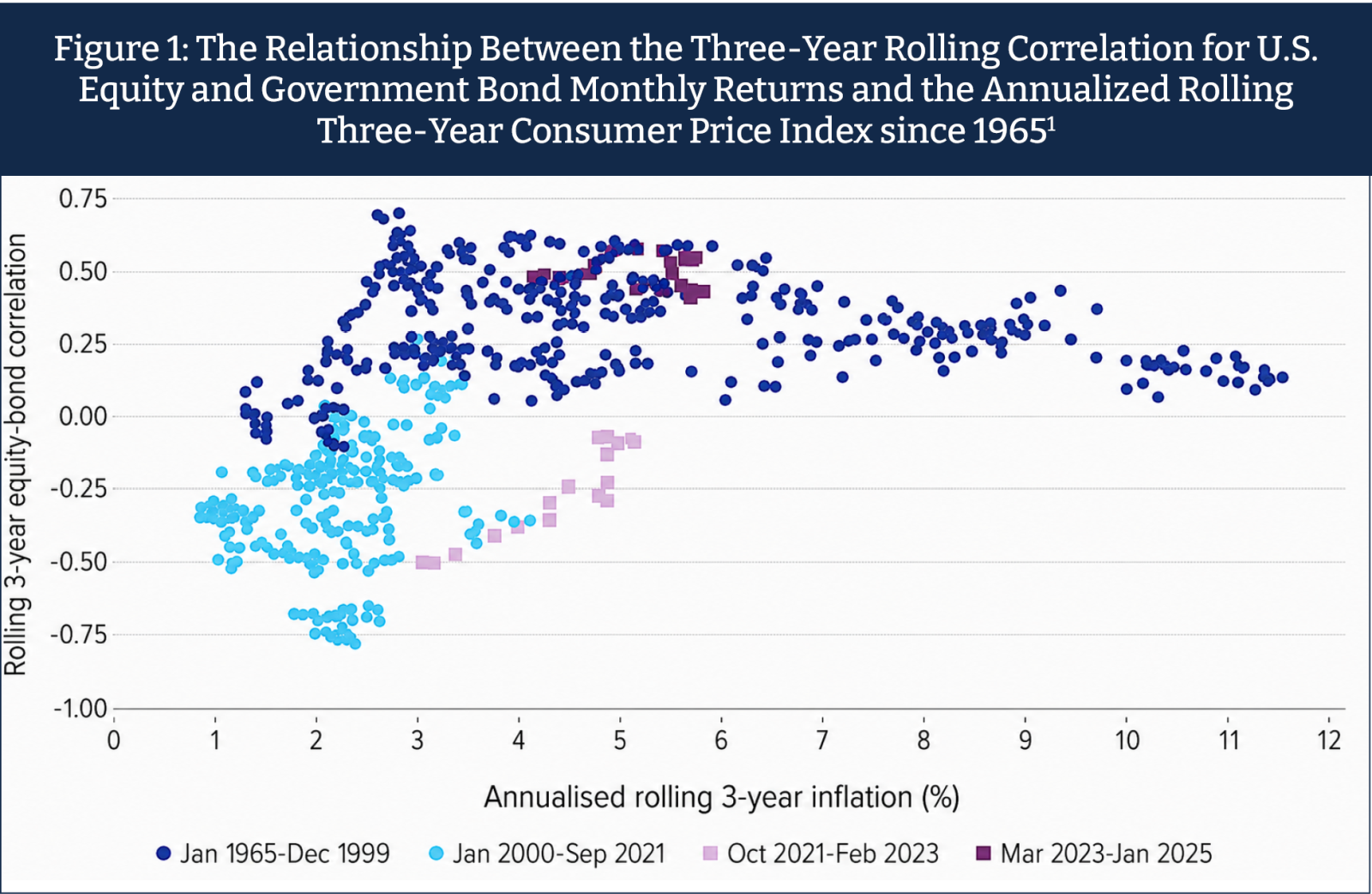
For the past two decades, most investors could rely on a simple and well-tested assumption: when equities fell bonds rose. Investors could trust that the stock-bond correlation would remain negative and bonds would offset equity losses, balancing out their portfolio. However, that assumption is starting to break down, with recent research showing elevated inflation and monetary policy uncertainty are the primary drivers of a sustained spike in equity-bond correlation.1 A 2026 academic study across major developed markets confirmed the correlation continues to exhibit switching behavior driven by macroeconomic forces, with significant implications for portfolio construction and risk management.2 For investors tasked with meeting investment obligations, a portfolio built on an outdated assumption may pose long-term issues.
The Private Credit Solution
We believe true diversification requires exposure to assets that do not move with public markets. This exposure helps investors avoid allocating between two buckets that may move in the same direction such as equities and bonds.
Private credit has emerged as a meaningful solution with 94% of institutional investors now allocating, offering floating-rate income, lower volatility and returns that are more insulated from public market volatility.3
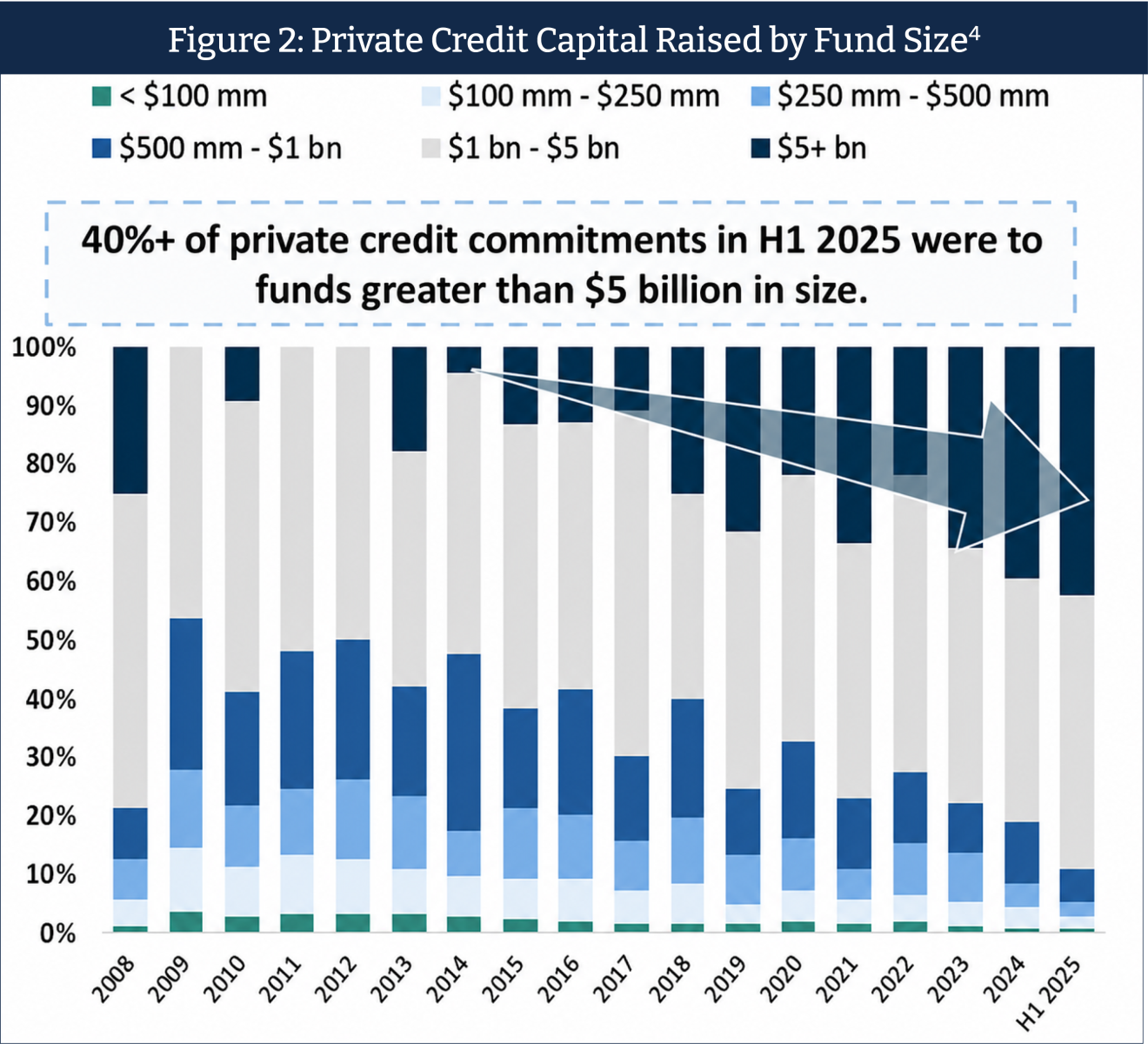
However, not all private credit portfolios are created the same and, as the asset class begins to grow, concentration among large managers and large borrowers can reintroduce correlation issues. McKinsey notes the top 25 private credit managers account for ~72% of total fundraising. The distinction that matters most is not whether to invest in private credit, but which segment and which underlying businesses provide access to it.5
Businesses Hidden in Plain Sight
Lower middle-market private credit occupies a distinct segment of private markets, one that has remained structurally insulated from the concentration and competition dynamics reshaping the broader asset class. Lower middle-market businesses, typically generating $10 to $250 million in annual revenue, see limited capital inflows from larger managers and banks which has helped preserve underwriting discipline, stronger governance and covenants, more conservative leverage and better alignment between investors and business owners. The result is an asset class that delivers floating-rate income, lender controls and returns that are structurally uncorrelated to public markets.6
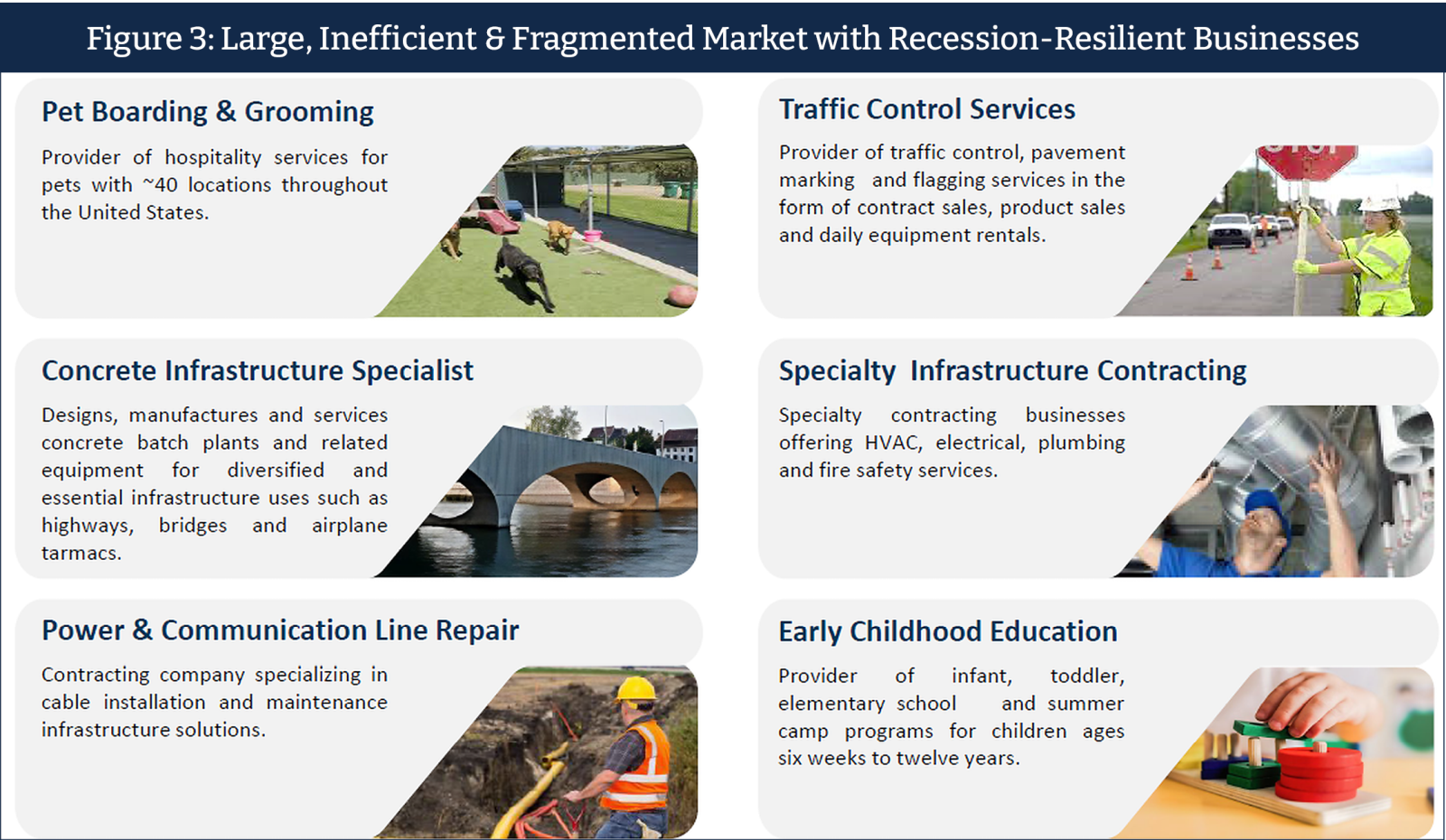
The businesses behind these loans make further diversification tangible. This segment of the market accounts for 44% of U.S. GDP, creating a vast opportunity set.7 Consider a fourth-generation family-owned manufacturer of concrete batch plants supplying U.S. infrastructure projects, a specialized cable installation contractor serving the telecom and gas industries or a provider of behavioral therapy services for children with autism. In our experience, these companies appear in no index and are unaffected by sentiment, rate expectations or technology narratives. Their performance comes down to the business, and nothing else. These businesses serve specific essential needs in their local economies, generate durable cash flows, and operate largely independent of the forces that drive public market volatility.
The breadth of these business types spanning manufacturing, infrastructure services, healthcare, and dozens of other essential industries means that a lower middle-market private credit allocation is not a concentrated bet on any single sector or macroeconomic theme. This segment of the market typically excludes software, offering a natural offset to the concentration most investors already carry in their portfolio. That diversity, combined with the structural protections still available in this segment, is what makes it a credible answer to the diversification problem that the breakdown of stock-bond correlation has created.
A Structural Solution for Long-Term Investors
The portfolio construction case for lower middle-market private credit rests on a combination of characteristics that are difficult to replicate elsewhere. Over the past decade, private credit has delivered higher returns and lower volatility compared to both leveraged loans and high-yield bonds, with volatility measured by standard deviation on an unsmoothed basis to remove the artificial effects of delayed fair value reporting.8
For investors managing long-duration liabilities, that reduction in standard deviation is itself a primary objective. Floating-rate structures provide income stability across varying interest rate environments. Low correlation to public markets that characterizes lower middle-market private credit reduces the likelihood of simultaneous drawdowns across a portfolio, contributing to stronger risk-adjusted returns overall.9 Covenant protections that remain intact in this segment of the market give lenders meaningful oversight and early indicators of credit stress, protections that are largely unavailable to investors in public fixed income markets.10 For investors who can no longer rely on bonds for the diversification they once provided, lower middle-market private credit offers a disciplined, research-supported path forward.
Brett Hickey, Founder & CEO, Star Mountain, has 25 years of private investing and investment banking experience including 20+ years of lower middle-market experience, having completed 100+ direct platform investments and 50+ secondary/fund investments.
He is the Founder & CEO of Star Mountain, a specialized private investment firm focused on the U.S. lower middle-market, routinely recognized as one of the Best Places to Work by Crain’s and Pensions & Investments.
He previously worked as an Investment Banker at Citigroup Global Markets (formerly known as Salomon Smith Barney). He graduated with Distinction from McGill University in Canada with a Bachelor of Commerce degree in Finance and Accounting and is an alumnus of Harvard Business School’s Owner, President / Manager executive training and management program.
Board positions include Harvard Alumni Entrepreneurs, Foreign Policy Association, YMCA of Greenwich and Star Mountain Charitable Foundation. He has been a member of Young Presidents’ Organization (YPO) since 2008 and is a member of Chief Executives Organization (CEO) and Forbes Business Council.
Endnotes:
- Barclays Private Bank, “Where Next for the Equity-Bond Correlation,” March 2025.
- ScienceDirect, “Stock-Bond Correlation Dynamics in Major Developed Markets,” January 2026.
- Creative Planning, “Rising Popularity of Private Credit,” March 2026.
- Global Pitchbook Q1 2025 Global Private Market Fundraising Report.
- McKinsey & Company, “Global Private Markets Report: Private Credit,” April 2026.
- Robeco, “Private Credit: The Good, the Bad and the Illiquid,” April 2026.
- NAICS. As of December 2024.
- Morgan Stanley, “Private Credit Outlook and Considerations,” 2025.
- Robeco, “Private Credit: The Good, the Bad and the Illiquid,” April 2026.
- Northleaf Capital Partners, “Private Credit Market Update: Q2-2025,” July 2025.
Disclosures: Certain information contained herein has been obtained from third party sources and such information has not been independently verified by Star Mountain. No representation, warranty, or undertaking, expressed or implied, is given to the accuracy or completeness of such information by Star Mountain or any other person. While such sources are believed to be reliable, Star Mountain does not assume any responsibility for the accuracy or completeness of such information. Star Mountain does not undertake any obligation to update the information contained herein as of any future date. Except where otherwise indicated, the information contained in this presentation is based on matters as they exist as of the date of preparation of such material and not as of the date of distribution or any future date. Recipients should not rely on this material in making any future investment decision. Certain information contained herein constitutes “forward-looking statements,” which can be identified by the use of forward-looking terminology such as “may,” “will,” “should,” “expect,” “anticipate,” “project,” “estimate,” “intend,” “continue,” or “believe,” or the negatives thereof or other variations thereon or comparable terminology. Due to various risks and uncertainties, actual events, results or actual performance may differ materially from those reflected or contemplated in such forward-looking statements. Nothing contained herein may be relied upon as a guarantee, promise, assurance or a representation as to the future. Awards and Recognition Disclosure Star Mountain Capital’s awards and recognitions are based on third-party evaluations and criteria, which may be subjective. These honors do not imply a guarantee of future performance or an endorsement by current or past clients.