
The Market in Transition
By: Olga Bitel, William Blair Investment Management
Markets have remained resilient in 2026, supported by strong global growth. But beneath the surface, leadership is
shifting and inflation remains a source of uncertainty. The result is an environment in which economic fundamentals remain supportive, but greater dispersion, higher capital costs, and less consistent market leadership could make security selection increasingly important in the second half of the year.

Markets have been remarkably resilient, underpinned by strong and accelerating economic growth. At the same time, shifts in market leadership suggest that no single sector or industry is likely to dominate. In this environment, stock selection should become increasingly important. In other words, we believe it’s a classic stockpickers’ market.
Broad Market Strength: Masking a Shift
Equities posted strong gains across regions in the second quarter. U.S. all-cap equities returned 15.7%, while emerging markets (EM) equities gained 22.8%, and developed markets outside the United States rose 14.0%.
Positive equity returns have largely carried into the third quarter. Quarter-to-date as of August 19, 2026, U.S. all-cap equities have gained 2.6% and non-U.S. developed-market equities are up 2.0%. The notable exception has been EMs, down 2.5% quarter to date.
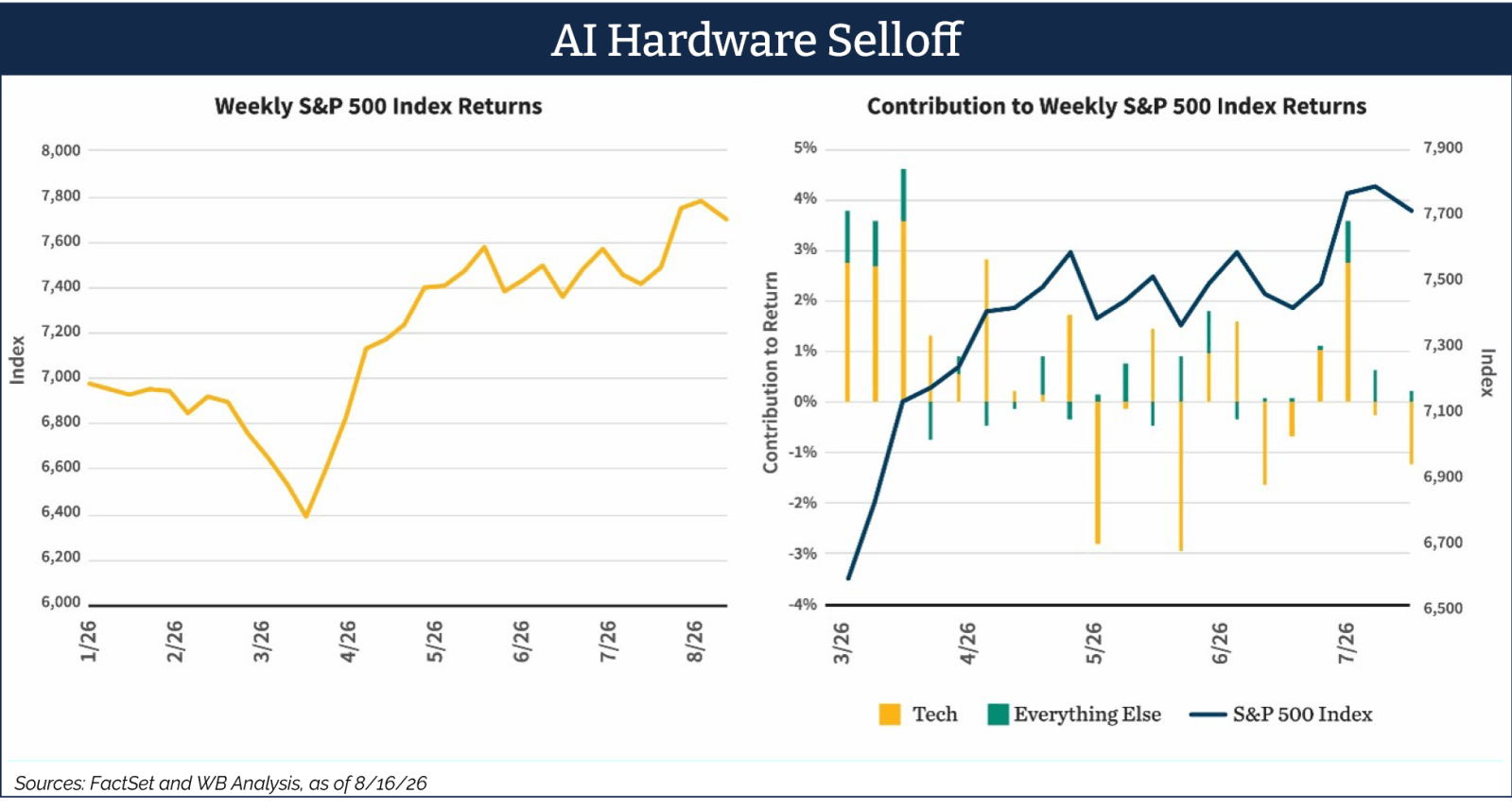
Equity markets have remained resilient at the index level but are experiencing substantial churn underneath the surface. Globally, industries that lagged in 2025 have moved to the top of the leaderboard, quarter to date. Market leadership has not rotated into a defensive posture, but rather into industries that typically perform well when economic activity is healthy and expanding.
Growth: Supporting Market Resilience
Growth around the world remains strong. Across broad measures of macroeconomic indicators — including manufacturing purchasing managers’ index, auto sales, and inflation-adjusted retail sales — the latest data have generally improved compared to previous months.
Economic surprise indicators provide another lens on the strength of the global backdrop. Developed-market economies are generally surprising to the upside: U.S. data continue to come in ahead of expectations, the euro area has rebounded sharply from its second-quarter trough.
The EM picture is more mixed. Chinese data continues to disappoint relative to expectations, and Latin America has also been weaker than anticipated. EM Asia has lost some momentum as well, consistent with the broader cooling in AI-related technology and infrastructure activity.
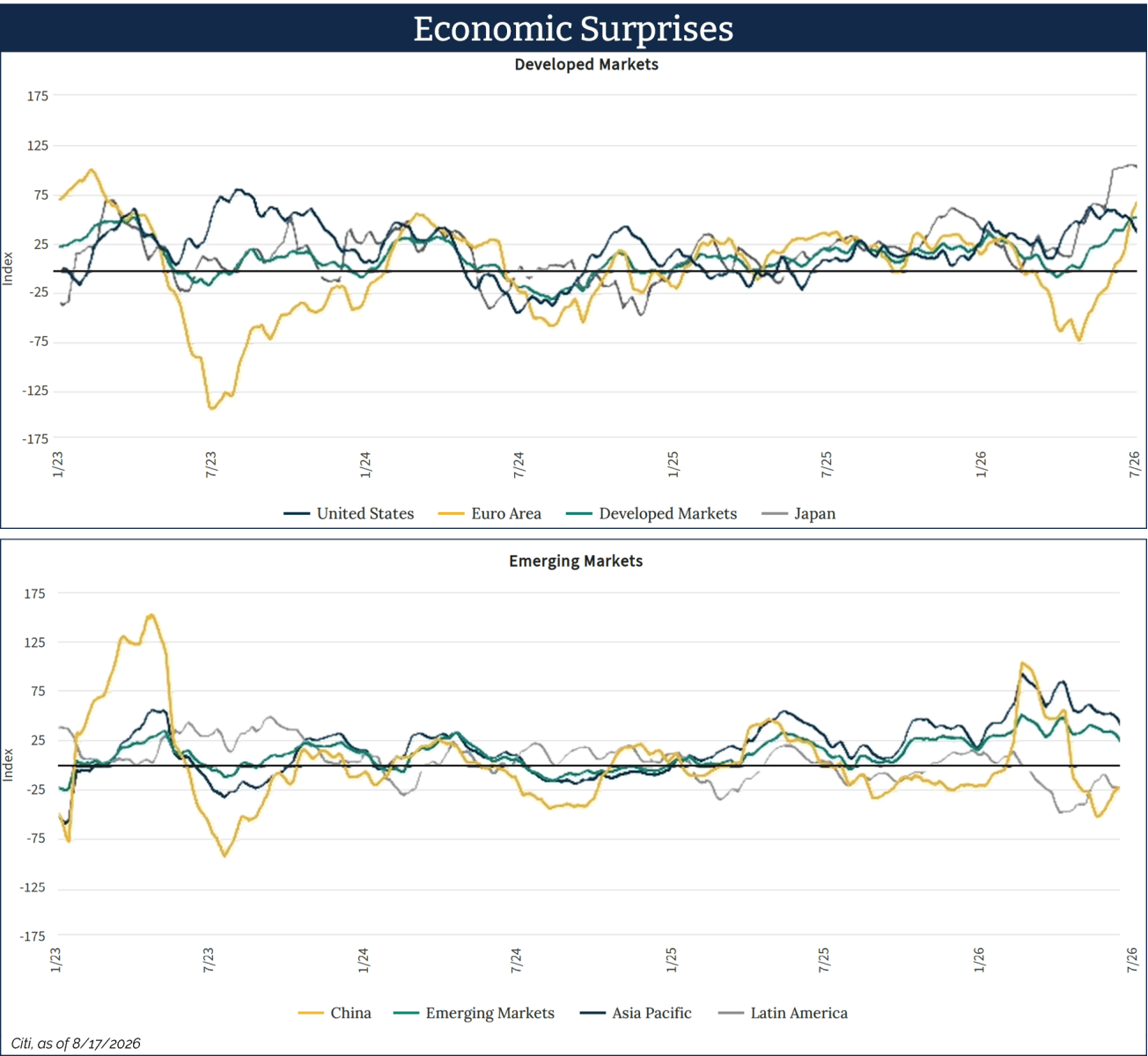
Economic activity is still relatively buoyant, and much of the developed world is performing better than markets had expected. The change in leadership appears less about investors preparing for an economic downturn and more about capital rotating within a still-expanding global economy.
Inflation Volatility: The Next Challenge
Strong growth is supporting markets, but inflation is likely to remain volatile. Three forces, in particular, could keep price pressures unsettled through the second half of the year: energy prices, semiconductor prices, and tariffs.
Energy is the first source of uncertainty. Crude oil prices have been volatile, but the prices of refined products have risen more sharply. That uncertainty can weigh on demand even if outright energy prices ultimately moderate.
The second source is “chipflation.” Memory semiconductor prices have risen dramatically amid supply constraints. However, there are signs that the pricing pressure, specifically in memory chips exported from South Korea, may be beginning to ease.
Tariffs represent the third source of uncertainty. After the Supreme Court invalidated the U.S. administration’s broad tariffs, the administration has continued to pursue additional trade actions through various mechanisms, including Section 301.
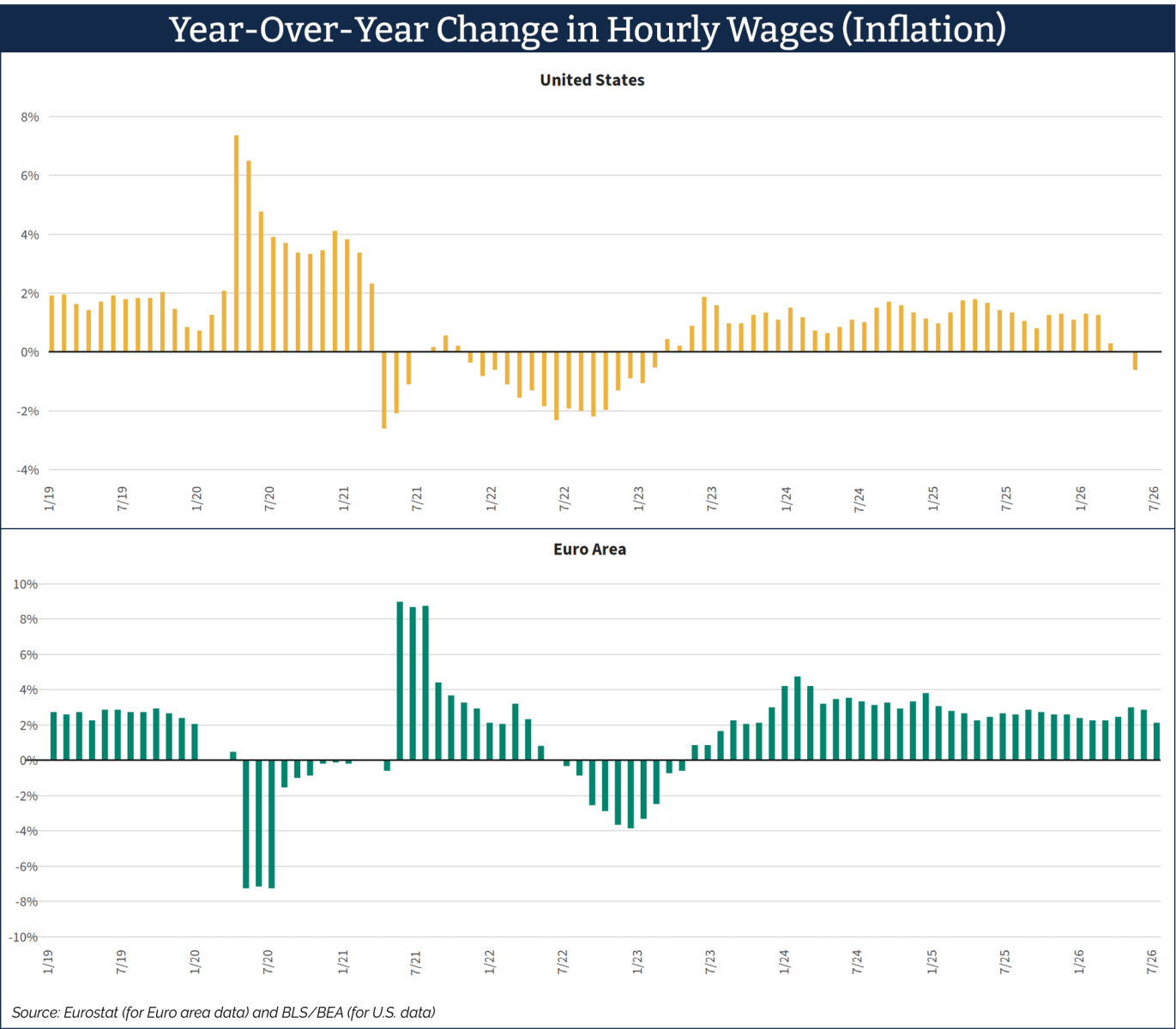
Together, these forces could keep inflation volatile even as economic growth remains healthy. In the United States and Europe, that pressure is increasingly visible in slowing real wage growth.
Rising Rates: Not Necessarily Bad News
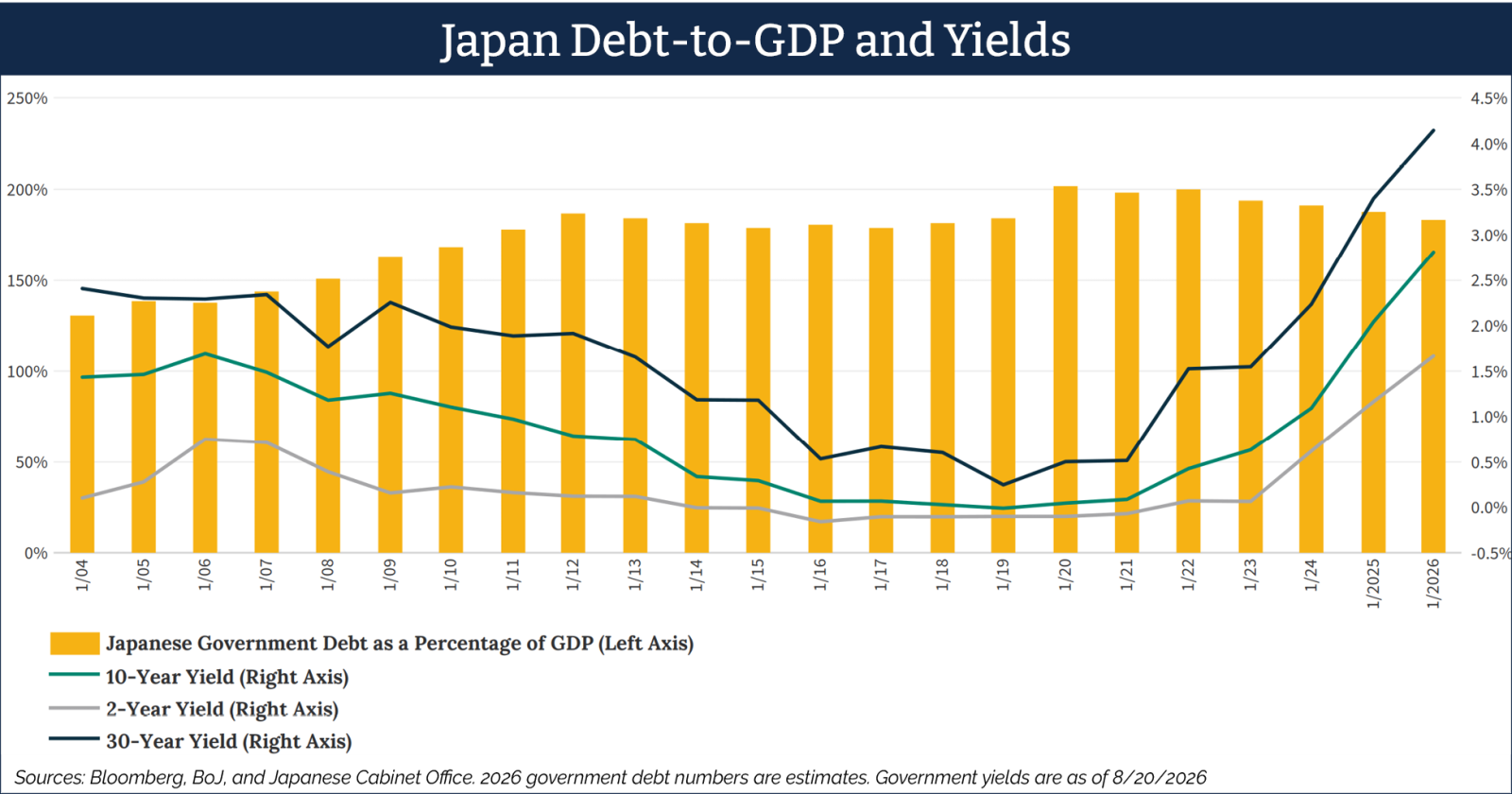
Rising government bond yields across developed markets have raised concerns about fixed-income performance and debt sustainability, but the rise in yields also reflects something more constructive: stronger demand for capital.
As investment in physical infrastructure, manufacturing capacity, energy, defense, and other tangible assets increases, so does capital spending. More capital spending means greater demand for financing, which in turn can put upward pressure on the cost of capital.
Yet higher rates do not necessarily imply worsening debt dynamics. What matters is the relationship between borrowing costs and nominal economic growth. This scenario is playing out in Japan today: government debt-to-GDP peaked in 2022 and subsequently has fallen by 10%, while 10-year yields rose by nearly 200 basis points from 2022 through 2025.
The Story in Short
Markets have remained resilient in 2026, supported by strong and, in many cases, accelerating global growth. But beneath the surface, leadership is shifting: AI-related technology and infrastructure have lost momentum, a broader range of industries and countries are participating, and higher capital spending is helping push interest rates higher.
At the same time, inflation remains a source of uncertainty, with volatile energy prices, elevated semiconductor costs, and tariffs all contributing to a less predictable backdrop.
The result is an environment in which economic fundamentals remain supportive, but greater dispersion, higher capital costs, and less consistent market leadership could make security selection increasingly important in the second half of the year.
Olga Bitel, Partner, is chief investment strategist at William Blair Investment Management. She is responsible for articulating the firm’s views on global economic conditions, monetary and fiscal policy, financial markets, geopolitical developments, and the investment implications arising from these trends. Olga engages with clients, prospects, consultants, intermediaries, the media, and industry audiences to communicate the firm’s perspectives and showcase the collective expertise that exists across Investment Management. Formerly, Olga was a global strategist and was responsible for economic research and analysis across all regions and sectors. Before joining the firm in 2009, she was a senior economist at the National Institute of Economic and Social Research in London, United Kingdom, producing macroeconomic forecasts for Asian economies and leading thematic research projects for major international organizations, including OPEC and the IMF. Olga received a B.A. from the University of Chicago and an M.Sc. in economics from the London School of Economics and Political Science.