House Passage of Budget Reconciliation
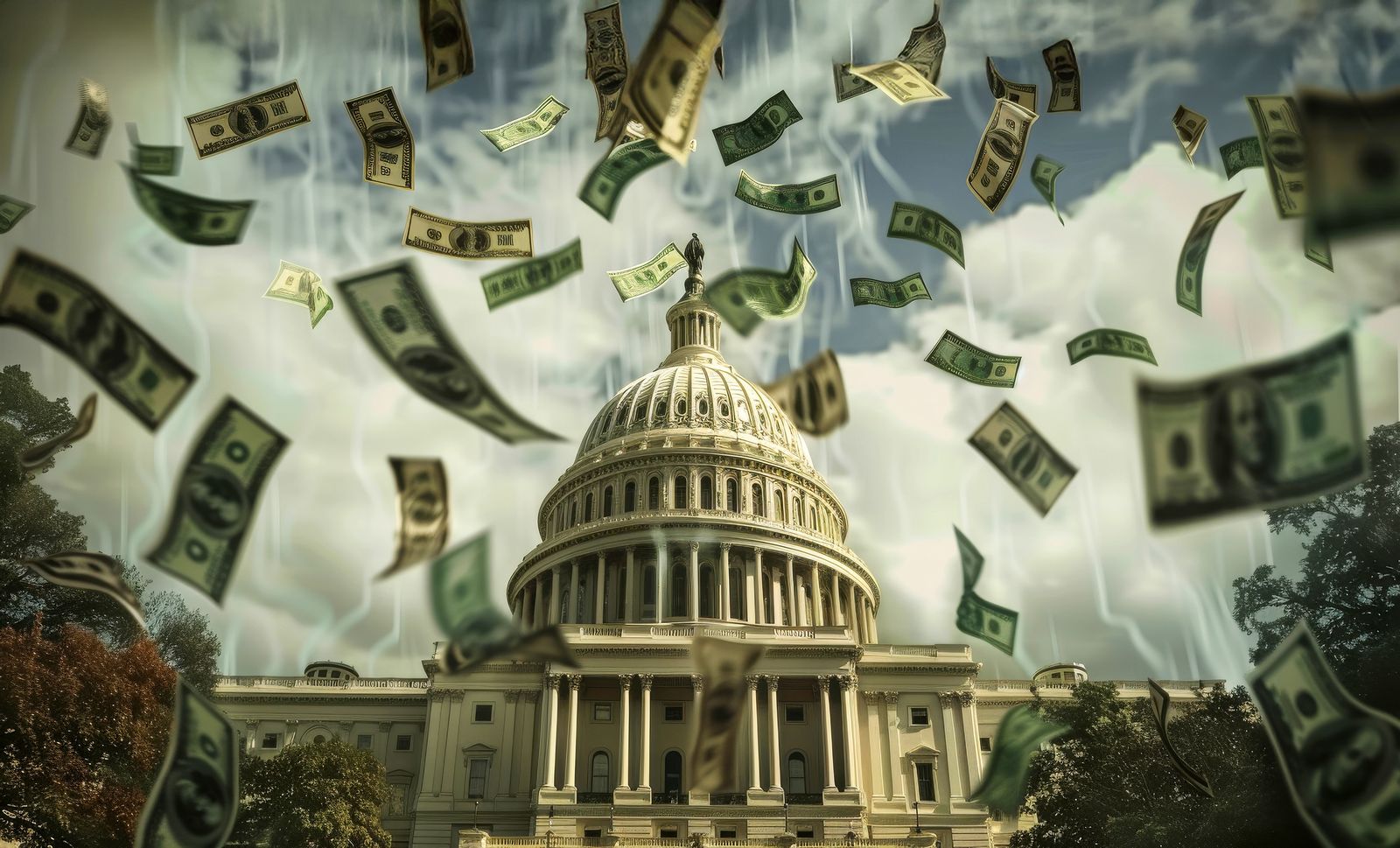
On May 22, the U.S. House of Representatives by a vote of 215-214 approved its version of a budget reconciliation bill that touches on most areas of federal policy and programs, including an extensive section on taxation.
By: Tony Roda, Williams & Jensen
On May 22, the U.S. House of Representatives by a vote of 215-214 approved its version of a budget reconciliation bill that touches on most areas of federal policy and programs, including an extensive section on taxation.
The public pension community has been concerned, and will remain so until the legislation is finalized late this summer, that provisions harmful to our plans and their participants could be contained in the reconciliation bill. In particular, bear in mind that the original House-passed version of the Tax Cuts and Jobs Act of 2017 (TCJA) contained a provision to specifically subject investments of state and local governmental pension plans to the Unrelated Business Income Tax (UBIT). Analysis of the provision at the time concluded that UBIT would cover certain investments in private equity and hedge funds, and debt-financed investments.
NCPERS, among other stakeholders, took the lead in lobbying against the UBIT provision, and it was not included in the final TCJA. However, because it was a Republican initiative, concerns persist that the UBIT provision could resurface in Congress at some point. It is possible that prior to conclusion of this year's bill, which is anticipated to occur in July, Congress may be forced to find additional spending and revenue offsets. Thus far, the UBIT provision has not surfaced in the context of the current reconciliation bill, but the full story of this legislation is far from written. The Senate still must draft and approve its version of the reconciliation bill and then the two chambers must negotiate the final legislation.
Interestingly, and 180 degrees from the partisan budget reconciliation bill being developed in Congress today, House Ways and Means Committee Chairman Jason Smith (R-MO) recently announced at an appearance at the Economic Club of Washington, D.C., that he'd like to pass bipartisan tax legislation before the end of 2025.
Specifically, Chairman Smith said, “I would love to work with Sen. Wyden, Chairman Crapo, ranking member Neal in trying to craft a bipartisan bill before the end of the year, because there's a lot of tax provisions that I really care about that are expired, or have expired, that are truly, truly bipartisan.” Senators Ron Wyden (D-OR) and Mike Crapo (R-ID) are the senior Democrat and Chairman of the Finance Committee, respectively, and Rep. Richard Neal (D-MA) is the senior Democrat on the House Ways and Means Committee. These members are typically referred to as the four corners of tax legislation, and any bipartisan tax measure would need each of their approval.
During the last Congress, Chairman Smith and then-Finance Committee Chairman Wyden negotiated legislation that would have expanded the child tax credit and revived some business tax incentives. Some of these business incentives now are contained in the partisan reconciliation bill, so the same pieces of tax policy that allowed for the bipartisan deal last Congress will not be present. Also arguing against the possibility of a bipartisan bill later this year is the fact that the partisan reconciliation bill will sap any goodwill between the two political parties on tax policy, at least for some period of time. The sour feelings could be overcome if the upside to a bipartisan bill for both parties is substantial. However, it is left to be seen just what tax provisions will create that level of substantial upside.
The key question for the public pension community is whether a bipartisan bill would include provisions related to pension or retirement policy. The answer to this question as well as to the underlying question of whether a bipartisan tax bill can be developed at all this year certainly are not known at this time.
Regardless of whether Chairman Smith's wish for a bipartisan tax bill is realized, it is possible that Congressional tax writers will return to retirement and tax policy next year. Congress could continue on the path begun by recent retirement tax legislation, which pursued three overarching themes:
- Savings enhancement and increased coverage;
- Preservation of income; and
- Simplification and clarification.
In recent years, Congress has approved two major pieces of retirement legislation – the SECURE Act and the SECURE Act 2.0. Both of these bills passed Congress by overwhelming bipartisan majorities. Retirement policy has been an oasis of bipartisanship in an otherwise partisan tax policy world. Our community would like to keep it that way.
Be assured that NCPERS will closely monitor the budget reconciliation process in Congress as well as any future tax legislation. We will report significant developments to the NCPERS membership.
Tony Roda is a partner at the Washington, D.C. law and lobbying firm Williams & Jensen, where he specializes in legislative, regulatory, and fiduciary matters affecting state and local pension plans. He represents the National Conference on Public Employee Retirement Systems and state-wide, county, and municipal pension plans in California, Colorado, Georgia, Kentucky, Nebraska, Ohio, Tennessee, and Texas. Tony has an undergraduate degree in government and politics from the University of Maryland, J.D. from the Catholic University of America, and LL.M (tax law) from the Georgetown University Law Center.