
Fannie Mae and Freddie Mac: Maximizing Value for All Stakeholders
Date postedSeptember 30, 2025
By: Ray Wicklander, Great Lakes Advisors
This article discusses the potential privatization of Fannie Mae and Freddie Mac and proposes a contingent capital structure, which we feel would equitably and optimally address key stakeholders. The suggested Contingent Capital Commitment Facility (CCCF) would provide assurance to Agency MBS investors while protecting U.S. taxpayers and maximizing the value of Treasury's investment. The CCCF mechanism balances the needs of all stakeholders and offers a viable path forward as & if the GSEs are released from conservatorship.
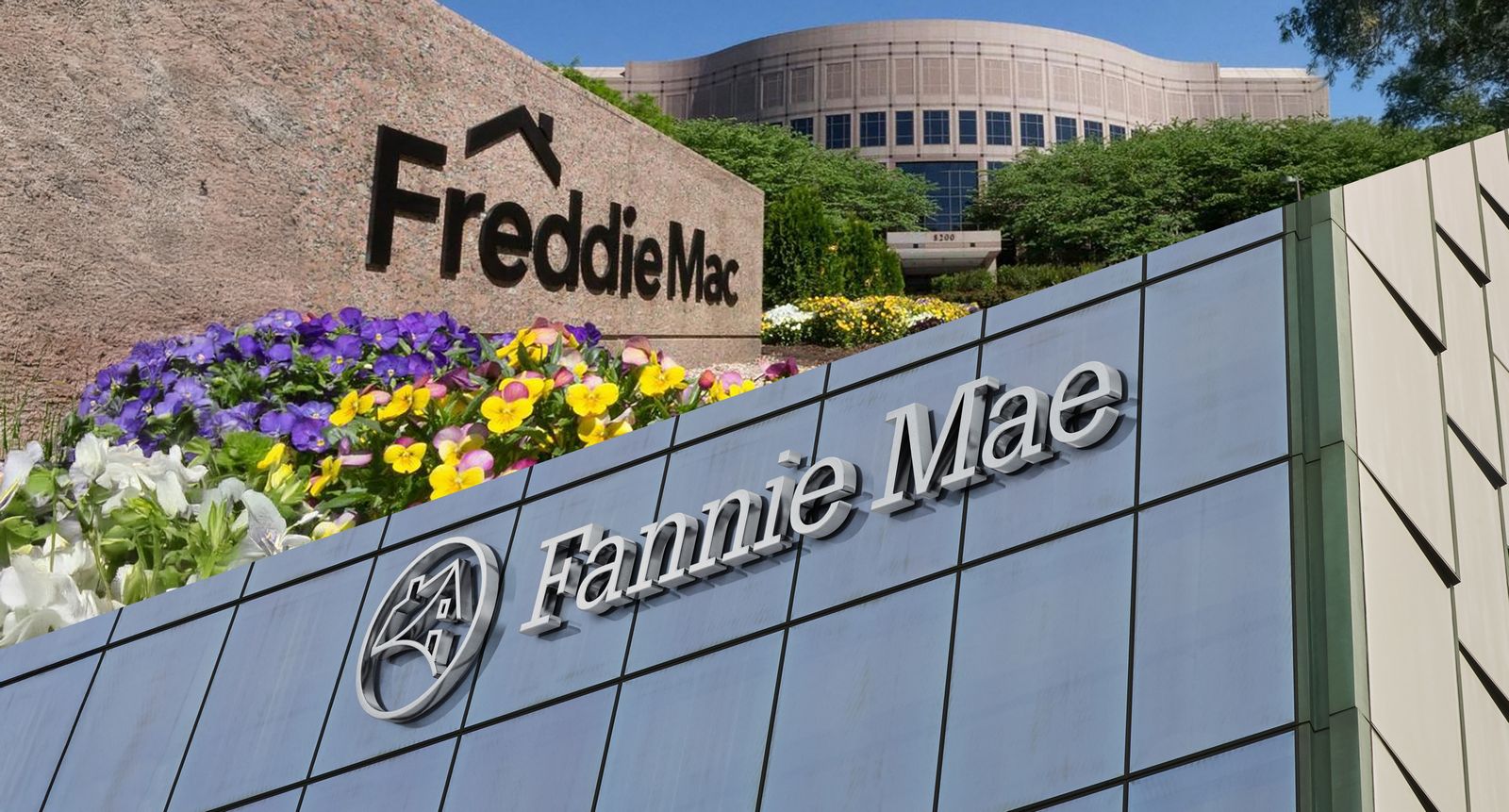
This is an excerpt from NCPERS Summer 2025 issue of PERSist.
Recent comments from Treasury Secretary Bessent, FHFA Director Pulte, and more recently by President Trump, suggest that systemically-important mortgage guarantors Fannie Mae and Freddie Mac (the “GSEs”) may be privatized and released from government conservatorship. This is a politically sensitive issue with many important stakeholders – primary of which are U.S. taxpayers, mortgage borrowers, mortgage-backed securities (MBS) investors, and, by extension, the U.S. housing market and economy.
Fannie Mae and, to a lesser extent, Freddie Mac are well capitalized today. Fannie Mae has over $90bn in capital, roughly three times the amount as 2007, which is likely sufficient to withstand the most severe credit stress tests. The problem is, greater than 100% of Fannie Mae's capital is in the form of Senior Preferred stock, owned by the Department of the Treasury, leaving common equity – the highest quality form of capital for a financial institution – negative, and deficient compared to “well capitalized” core capital standards.
To equitably balance the interests of all stakeholders and address the (significant) issue of government guarantees of Agency MBS, the liquidation preference of the government's Senior Preferred stakes (for Fannie Mae, just over $200bn, as of 3/31/2025) could be replaced, nearly dollar-for-dollar, with a new, unfunded facility from Treasury to the GSEs: a Contingent Capital Commitment Facility (CCCF). Were the GSEs' capital levels to ever breach a well-capitalized minimum standard, the CCCF would convert into new common equity at a predefined (and highly dilutive) price. This would give one of the GSEs' primary stakeholders – Agency MBS owners – contractual assurance that Fannie and Freddie will always be capitalized beyond reproach, effectively closing the debate around implicit or explicit government guarantees of Agency MBS.1
For the US taxpayer, who currently sits in a “first loss” position in the GSEs, a structure like the CCCF would move the taxpayer to a “risk-remote” position, and, like any unfunded commitment, the CCCF should carry a fee, to provide Treasury and US taxpayers with a stream of annuity-like fee income from the (hopefully perpetually) undrawn commitment. More importantly for taxpayers, certainty about the capital structure and shares outstanding would maximize the value of Treasury's 79.9% warrants in each GSE. In Fannie Mae's case, the value of the warrants should ultimately be worth well over $100bn, and the capitalized value of the commitment fee around $60bn, providing a highly competitive outcome for taxpayers, on top of what has already been paid to Treasury.2
Finally, to further upgrade and simplify the GSEs' capital structure, Junior Preferred shareholders could be offered the option to convert from preferred stock into common stock, at a preferential price. Common Equity Tier 1 capital is the highest-quality capital for a financial institution, and a conversion option for the Junior Preferreds would incentivize Common Equity Tier 1 build, further reducing risk to taxpayers.
Incentives matter. These structural changes would provide strong, positive motivation to GSEs' management to underwrite conservatively, and allocate capital appropriately, as well as reward efforts to curb mortgage fraud and operate efficiently. The benefits of a safe, liquid, well-capitalized mortgage market inure to the US housing market, US mortgage investors and borrowers, and by default, the entire US economy. And a structure like this for the GSEs upon release of conservatorship would effectively balance and maximize the interests of all stakeholders.
Disclosures: Performance data quoted herein represents past performance. All data is as of the current quarter, unless otherwise noted. Returns and net asset value will fluctuate. Performance figures have been reduced by the actual fees paid by composite accounts; applicable fees may vary depending on a number of factors, including the relevant fee schedule and portfolio size. For performance current to the most recent month end, please call 312-553-3700. Additionally, market commentary is available upon request. The currency used to express performance is the US Dollar.
All indices are unmanaged and performance of the indices includes reinvestment of dividends and interest income, unless otherwise noted. The indices are not illustrative of any particular investment and it is not possible to invest directly in an index. Indices are not managed or sold by Great Lakes Advisors or any of its affiliates.
Investments in debt securities typically decrease in value when interest rates rise. This risk is usually greater for longer-term debt securities. Investment in lower-rated and non-rated securities presents a greater risk of loss to principal and interest than higher-rated securities. To determine if an investment strategy is appropriate for you, carefully consider the investment objectives, risk factors, and expenses before investing. — 25-5-0004
For Financial Professional Use Only.
Endnotes:
1 A $200bn contingent capital commitment would equal about 15% of Fannie Mae's risk-weighted assets, around twice what would be considered adequate levels of capital, and this amount should be tied to risk-weighted assets to account for future growth
2 I would argue that replacing c. $200bn of value that is illiquid and risk-proximate (Senior Preferred) with c. $160bn of liquid (warrant intrinsic value) and risk-remote (CCCF capitalized fee value) consideration is a competitive and fair outcome for taxpayers.
Bio: Ray Wicklander runs the Global Value equities investment platform for Great Lakes Advisors, an institutional investment manager in Chicago. This is not intended as investment advice. Great Lakes Advisors' fixed income group owns or may own, in the ordinary course of business, Agency MBS, on behalf of clients. Great Lakes Advisors does not currently hold a position in the common or preferred stock of Fannie Mae or Freddie Mac. The views expressed are the author's own and do not necessarily reflect those of Great Lakes Advisors or its parent company.