NCPERS 2025 Public Pension Funding Forum Recap: Fresh Ideas, Case Studies, & Frameworks for Success
By: Lizzy Lees, Director of Communications, NCPERS
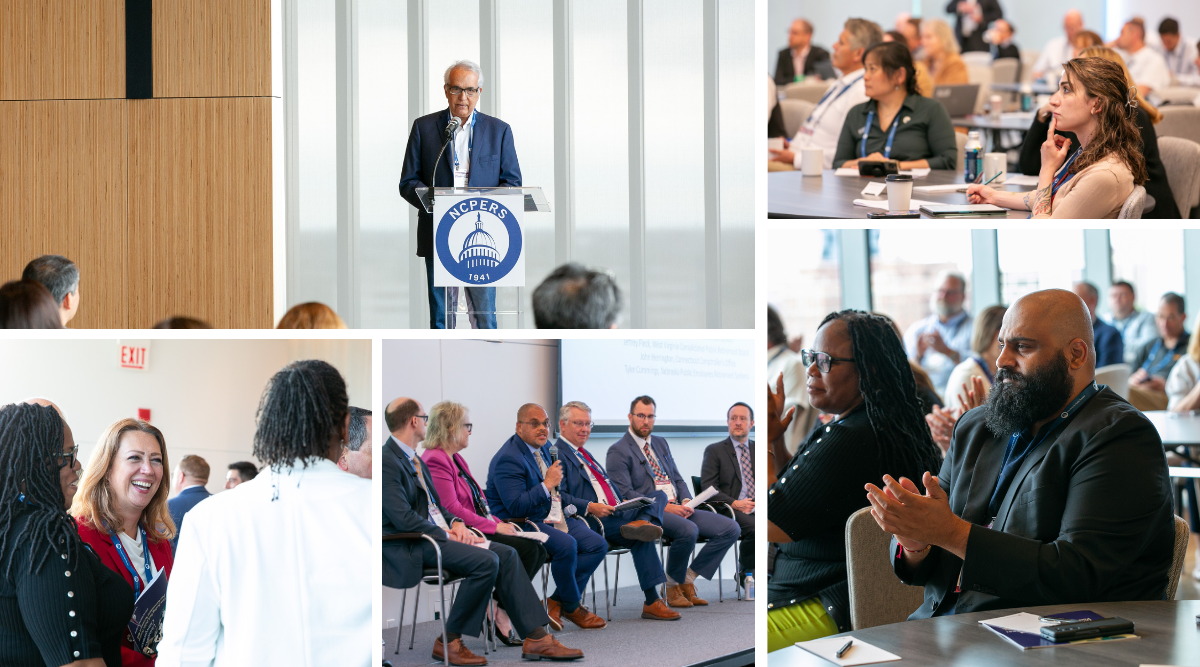
NCPERS 2025 Public Pension Funding Forum showcased new research, practical case studies, and fresh ideas to promote long-term fiscal sustainability. The forum brought together thought leaders, researchers, and practitioners at the University of Chicago on August 17-19 to explore the evolving landscape of public pensions.
Engaging the Next Generation of Public Pension Leaders
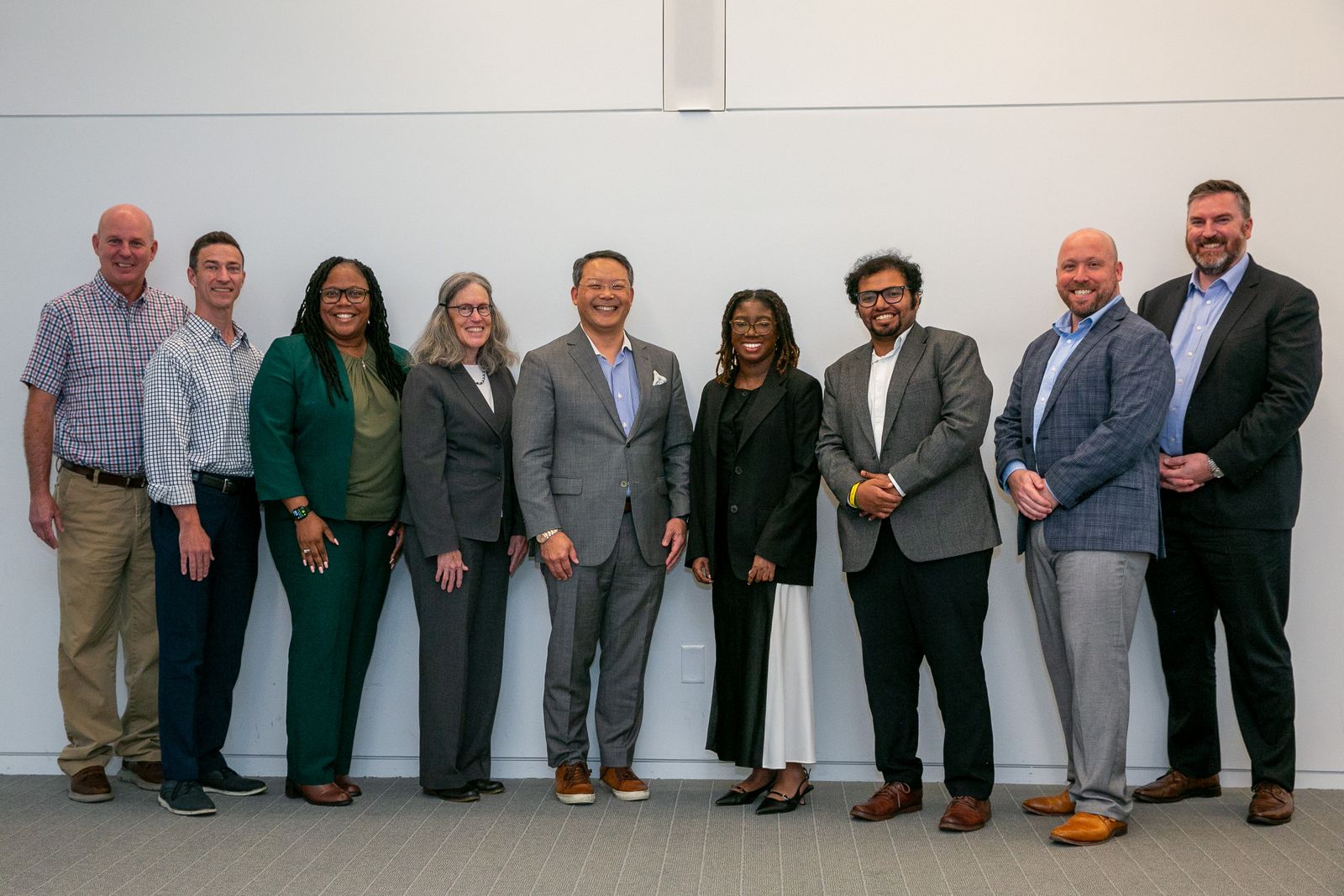
Hassan Ul Haq and Melodie Slaughter pose alongside Hank Kim and Matt Eckel (NCPERS); Paula Worthington and Justin Marlowe (University of Chicago); and judges Tiffany Junkins (Municipal Employees' Annuity and Benefit Fund of Chicago), Kevin Reichart (Policemen's Annuity and Benefit Fund of Chicago), and Tim Blair (State Employees' Retirement System).
A special addition to this year's program was the NCPERS-Harris Pension Lab: NextGen Competition. During this live pitch competition, two student teams from the University of Chicago Harris School of Public Policy presented their innovative, policy-driven solutions to improve the long-term sustainability of public pensions in Chicago.
Attendees cast their votes alongside an expert panel of judges, ultimately selecting Hassan Ul Haq and Melodie Slaughter as the winning team. They pitched a community-centered approach to generating tax revenue that would be added to the city's pension funds. By selling 3,000 of the vacant lots owned by the city of Chicago, they projected generating $29-45 million in property tax revenue over 10 years, while reducing maintenance costs for the city and reversing neighborhood blight in historically disinvested areas.
“While I knew the pension deficit was significant, I hadn't realized the full depth of the problem until this project,” said Slaughter. “My family is from Chicago, and I've seen firsthand how the pension shortfall affects Black communities. A significant share of Black professionals work in government and rely on pensions, something I grew up aware of through relatives and neighbors who placed great importance on their retirement security,” she added.
“Melodie and I wanted to continue to delve into the problem and explore it further, and that is why we decided that competition was a good option,” said Ul Haq.
As the winning team, Ul Haq and Slaughter will now participate in a research internship with NCPERS where they will have the opportunity to publish their work in a publication widely read by the public pension community. But long term, they both have ambitious goals and hope to make a positive impact.
Ul Haq hopes to build Machine Learning Models that are good for the people, whose architecture is visible to the public, and there is accountability in the system, with Humans in the Loop (HITL). Contact him on LinkedIn here.
Slaughter is most interested in roles at the intersection of public finance, community development, and economic policy. She hopes to design evidence-based solutions that address structural inequities, particularly in cities like Chicago, and connect fiscal sustainability with community uplift. Contact her on LinkedIn here.
2025 Public Pension Funding Forum Highlights
The theme of this year's Public Pension Funding Forum centered around best practices for achieving long-term fiscal sustainability, featuring a mix of research, case studies and practitioner perspectives, and expert insights.
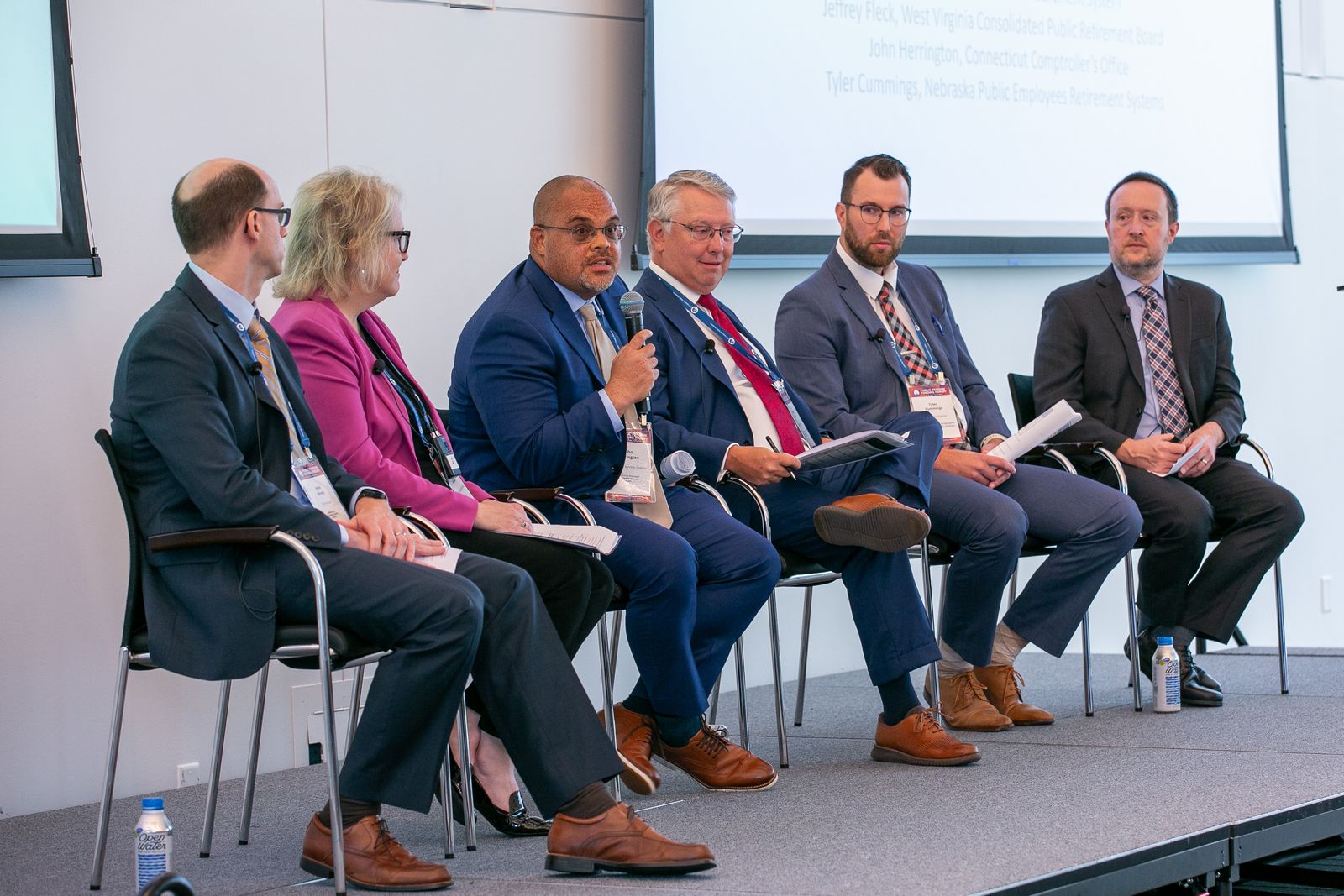 Frameworks for Success: NASRA's Keith Brainard emphasized policy principles for sustainable design, while Pew's David Draine and Corryn Hall highlighted best practices from states like Wisconsin and Tennessee. A panel of state pension leaders showcased how disciplined contributions above actuarial requirements have driven funding improvements.
Funding Mechanics and Market Dynamics: Experts unpacked layered amortization and its role in transparency, while new research from NIRS and Aon examined asset allocation trends. CalSTRS' Vaishali Dwarka shared strategic planning insights, and Luigi Zingales proposed a shift in corporate governance toward shareholder welfare maximization.
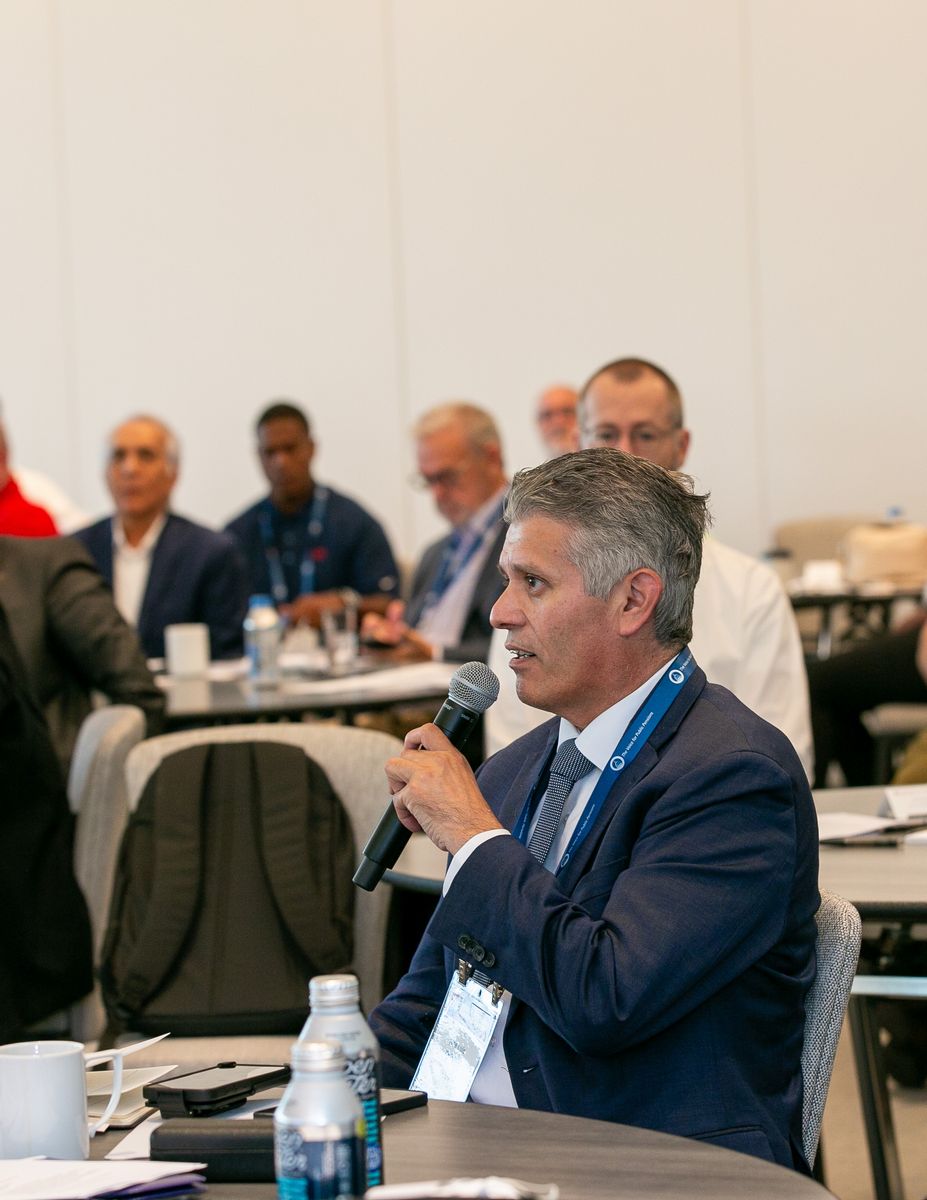 Actuarial and Investment Perspectives: Cheiron's Bill Hallmark and Michael Kahn introduced fiscal sustainability valuations as an actuarial tool to ensure the health of public pensions. Nuveen's David Wilson explored investment strategies aligned with plan demographics.
Global Pension Insights: David Knox of Mercer shared global pension insights from the Mercer CFA Institute Index, offering actionable strategies for U.S. systems to improve sustainability and adequacy. Matti Leppälä of PensionsEurope offered a global lens as he discussed Europe's pension evolution.
Economic Outlook: David Altig of the Federal Reserve Bank of Atlanta closed with an economic outlook, addressing market challenges ahead.
How it All Began... And What's Next for 2026
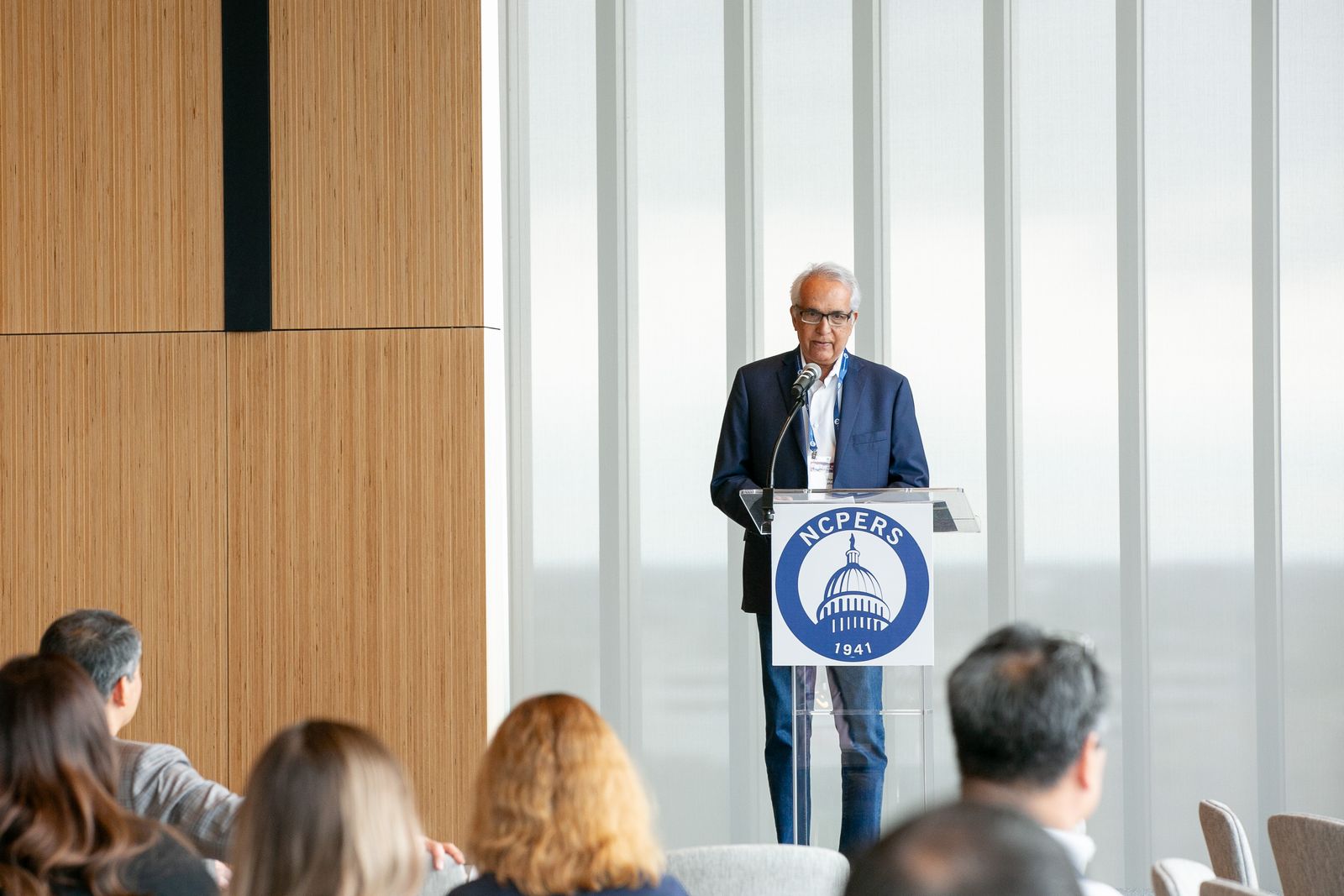
NCPERS hosted its first annual Public Pension Funding Forum in 2014, driven by the vision of Michael Kahn, NCPERS Director of Research who saw the need to educate the public pension community on best practices for adequately funding pensions.
“From my perspective, the bottom line in any public program is adequacy and equity in funding. So, I wanted to develop an educational program for the public pension community that focuses on research and education on ways to adequately fund pensions,” he said.
During the 2025 Public Pension Funding Forum, Kahn announced his upcoming retirement as he passes the reigns to Matt Eckel, NCPERS Associate Director of Research. He will stay on in advisory capacity. Sign up here for updates on the 2026 Public Pension Funding Forum.