
The 120th Congress: What’s in Store for Retirement Policy?
By: Tony Roda, Williams & Jensen PLLC
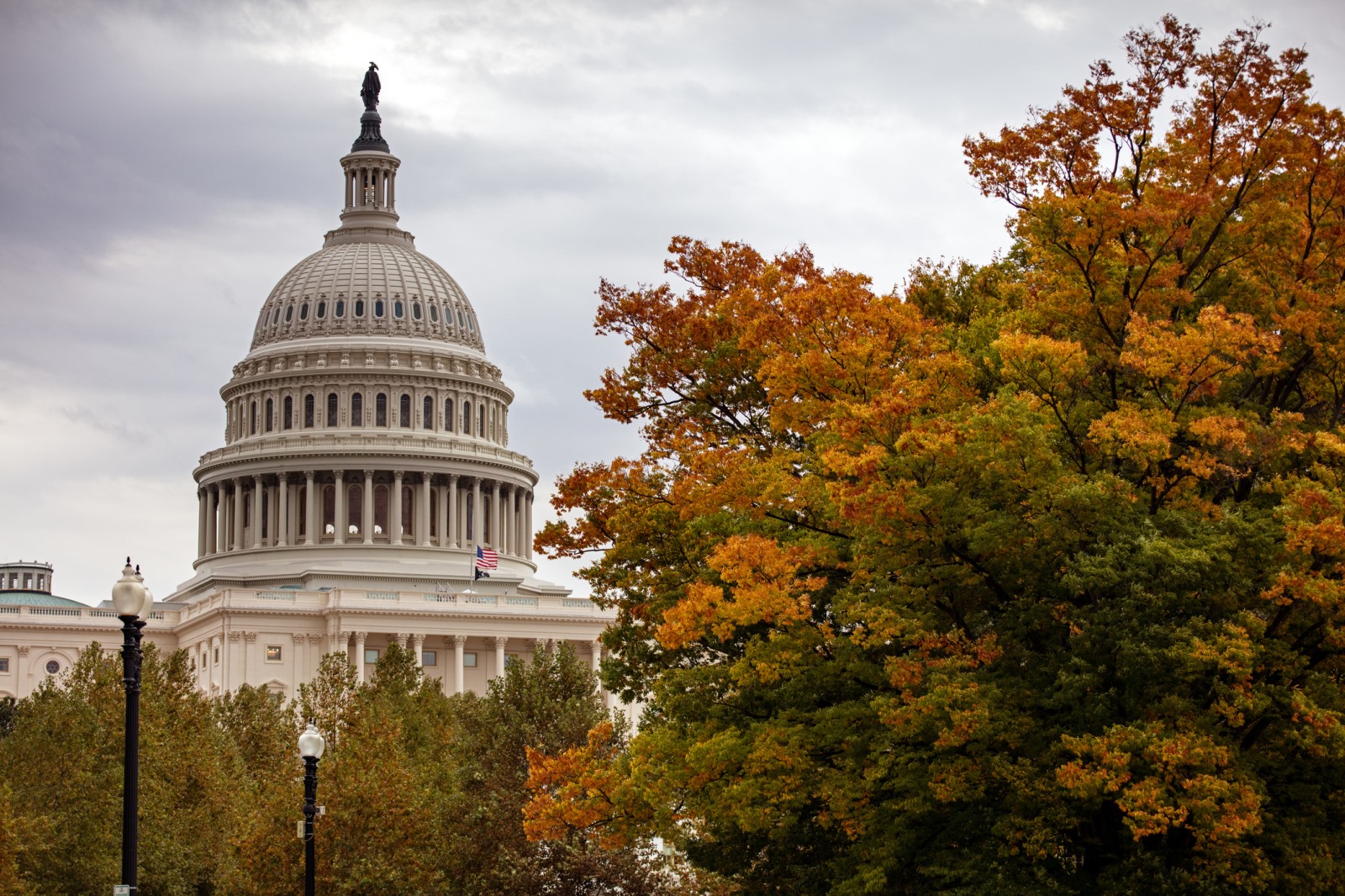
With a late October deadline for this article, it became an obvious challenge to write about the next Congress without first knowing the outcome of the November 3 elections. Political trends come and go, popularity rises and falls, polls conveniently have margins of error, but the actual votes cast is what matters in the end.
That’s not to say, however, that I won’t discuss the elections. How could I not? As this article was being drafted there were more than enough close races in the House and Senate to give either party a majority. As of October 26, the Cook Political Report, a well-respected source of election rankings for political prognosticators, showed 50 House races and 10 Senate contests in the toss up or lean categories. But which way is the wind blowing? From a Blue or Red direction?
Generic party preference polls have been a useful weather gauge in the lead-up to an election, and this year Democrats hold a sizable, pre-election advantage of 8-10 percentage points. In addition, there are indications that the Republicans may have overreached in their rush to use mid-cycle redistricting to create more safe seats for the GOP. The prime culprit may be that new House district lines were drawn using President Trump’s high-water mark for Hispanic and Latino voter support and grafting those numbers onto newly drawn districts. In other words, if Hispanic and Latino voter support turns out to be much lower in this election than it was for President Trump in 2024, and indications are that it will be lower, then Republicans will have drawn new competitive districts instead of safe GOP districts.
In the world of retirement policy, does it matter greatly which party controls the majorities in Congress? An argument can be made that retirement policy now transcends political party. In the U.S., approximately 11,200 people will turn 65 each day in 2026. This era, known as Peak 65, began in 2024 and will extend through 2030. That’s 4.1 million people turning 65 in each of those years.
What do we know about our older citizens? In general terms, we know they vote more often than younger demographic slices of the population; we know that they have more time to be politically informed and attend political and community events; and we know that some have more disposable income with which to make political contributions. Because of these factors, we also know that when they bring an issue to Members of Congress, the Members listen carefully and want to help, and often the issues they raise are related to retirement policy.
To illustrate the bipartisan nature of retirement policy let’s look at House passage of the two most recent major pieces of retirement legislation – the SECURE Act and the SECURE Act 2.0. The original SECURE Act was approved by the House in 2019 by a huge bipartisan vote of 417 to 3 and the SECURE Act 2.0 passed the House in 2022 by a similar lopsided margin of 414 to 5. Both measures were subsequently passed by the Senate as part of larger bills with unrelated provisions so the vote totals in that chamber are not directly comparable to the House votes. But the clear point is that bipartisanship in retirement policy is demonstrable.
When the 120th Congress takes office in January 2027 it will be faced with mounting pressure to deal with the Social Security system insolvency date now anticipated in the fourth quarter of 2032. Reaching this date without shoring up the program will result in a 22 percent across-the-board cut in retirement benefits.
Congress’s last major reform of the Social Security program took place in 1983. When judged against the current insolvency date discussed above, these 1983 reforms are expected to endure for some 50 years. That’s an impressive accomplishment. The 120th Congress or a successor Congress will want to achieve a similar success. If Congress stays within the traditional levers of the program, it will look at inputs (payroll taxes), benefit levels, and other structural modifications, such as a more aggressive investment of trust fund monies. A more aggressive investment approach would also lead to greater inputs.
In my view, at this time it is unlikely for Congress to consider a dramatic redirection of the program. Instead, it’s much more likely that Congress will stay within the program’s traditional policy levers during the next legislative reform effort. While new concepts have been advanced, such as outgoing Senator Bill Cassidy’s (R-LA) Big Idea, which would authorize borrowing $1.5 trillion from the U.S. Treasury to invest in a self-sustaining wealth fund, there does not now appear to be the political groundswell needed for such dramatic change.
As the Social Security debate develops, the public pension community must be mindful of any attempt to impose mandatory coverage of public sector workers. Currently some 28 percent of public sector workers are not in the Social Security program. They, instead, are covered by so-called FICA replacement plans that provide equal or greater retirement benefits. But proposals have swirled in Congress for decades on the notion of requiring that all workers, at least all new hires as of some future date, be in the program. The Congressional Budget Office estimates that such a proposal would generate $148.8 billion in new revenues for Social Security over 10 years, although its own estimate makes clear that this does not reflect the added costs to the program related to creating new beneficiaries and paying those benefits.
In addition to Social Security reform, the next Congress may continue down the road of making select, bipartisan changes to retirement tax law to further the goals of expanding coverage, increasing savings, and preserving retirement income. In this vein, development of a SECURE Act 3.0 is showing signs of life. Proposals are being collected now, and we have been encouraged by Congressional leaders to build a bipartisan group of legislators who will advance our priorities at the House Ways and Means Committee and the Senate Finance Committee.
As developments occur in the federal retirement policy area, please be assured that NCPERS will keep its members informed.
Tony Roda is a partner at the Washington, D.C. law and lobbying firm Williams & Jensen, where he specializes in legislative, regulatory, and fiduciary matters affecting state and local pension plans. He represents the National Conference on Public Employee Retirement Systems and state-wide, county, and municipal pension plans in California, Colorado, Georgia, Kentucky, Nebraska, Ohio, Tennessee, and Texas. Tony has an undergraduate degree in government and politics from the University of Maryland, J.D. from the Catholic University of America, and LL.M (tax law) from the Georgetown University Law Center.