
Women in Pension Leadership: TMRS Executive Director on Building a Culture of Excellence
By: Lizzy Lees, Director of Communications, NCPERS
As she approaches the one-year mark as Executive Director of the Texas Municipal Retirement System (TMRS),
Debbie Muñoz is reflecting on a milestone moment — both for the system and for her own leadership journey.
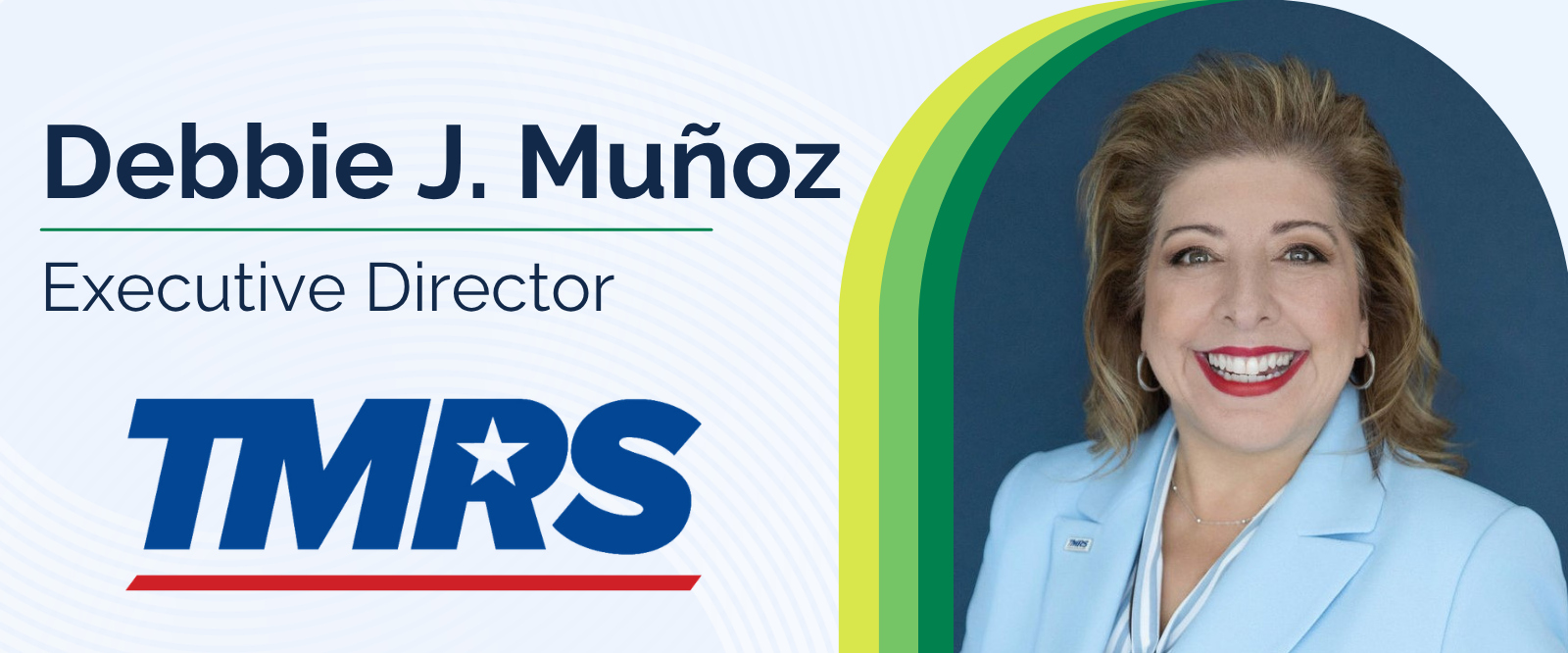
Muñoz, the first woman to lead TMRS in its history, stepped into the role after nearly three decades with the organization. Her mission-driven leadership style has centered on strengthening organizational culture and enhancing operational performance, all in service of delivering secure retirement benefits to more than 260,000 Texas public employees.
As part of NCPERS’ Public Pension Profile series, we spoke with Muñoz about her career journey, advice for women aspiring to the c-suite, and what’s next for TMRS.
What does it mean to you to be the first woman to lead TMRS?
Muñoz: It’s truly an honor, and a responsibility I carry with deep humility and pride. Being the first woman in this role is symbolic of progress that has taken place over the years. It reflects the perseverance and contributions of many women whose leadership hasn’t always been visible or recognized.
At the end of the day, it’s not about me. I’m a public servant, and my job is to help ensure retirement security for more than 260,000 public employees who have dedicated their careers to serving their communities.
I’m proud to be the first woman leading TMRS, but I also don’t want to be the last. My hope is that one day we no longer need to emphasize the ‘woman’ aspect and that we simply recognize strong leadership.
How have the different roles you’ve held with TMRS shaped your leadership style and vision as Executive Director?
Muñoz: My leadership style has been shaped by every role I’ve held over the past 28 years at TMRS. Early in my career, I spent time working in the field directly with members. That experience was transformative. What I witnessed firsthand reinforced our “why” — the real impact we have on people’s lives.
I’ll never forget helping an older municipal employee understand a benefit that allowed him to retire immediately. Seeing that kind of life-changing impact shaped how I view our mission. Our “why” is so important, and I take the responsibility of providing a secure retirement very seriously. I think that shared passion shines through in everything TMRS does as an organization.
Over time, I also had the opportunity to work with five different executive directors, each with a unique leadership style. I was able to observe and learn what worked well for each of them and what didn’t work as well. The biggest lesson I learned from them each, though, is that people matter. You have to listen, empower your team, and create an environment where employees feel valued.
Today, I prioritize transparency, continuous improvement, and building a culture where employees are engaged and empowered to succeed.
Looking back, what do you wish you knew early on in your career?
Muñoz: I wish I had known that it’s okay to speak up and be bold. When you’re young, you often want to learn and just listen. Early on in my career, I sometimes held back because I didn’t want to step on toes or because I felt I hadn’t “earned” a voice yet.
But if you have an idea or perspective, it’s important to share it — respectfully, but confidently — even if it goes against the grain.
I also wish I had understood the importance of developing a strong network of mentors and peers sooner. Having trusted colleagues you can turn to for advice is invaluable, especially when you’re navigating complex decisions.
And finally, I would tell my younger self to embrace change and not to be afraid to take calculated risks. Growth happens from stepping outside your comfort zone. Even when you make a mistake, you learn from it and keep moving forward.
What advice would you give to other women seeking a role in the c-suite in the public pension industry?
Muñoz: First and foremost, believe in your abilities and advocate for yourself.
I’ve seen too many women undervalue their contributions or hesitate to ask for what they deserve, whether it’s compensation, opportunities, or leadership roles. We need to be bold about advocating for ourselves.
I would also encourage women to actively seek out leadership development opportunities and take on challenging assignments that help expand their skill set. Rather than waiting to be asked, take a proactive approach.
Find people who will support you, challenge you, and champion your growth. And build a network that helps you stay resilient.
Ultimately, don’t be afraid to step forward and pursue your goals.
As you approach the one-year mark as Executive Director, what are you most proud of during this chapter?
Muñoz: I’m most proud of the culture we’ve cultivated together as a team. We’ve focused on creating an environment where employees feel valued, empowered, and motivated to contribute their best work. I emphasize “we” because our success is truly a collective effort.
This culture of excellence — centered on employee engagement, empowerment, and innovation — has been essential to advancing our mission.
It’s also been recognized externally. TMRS was named one of Austin’s top workplaces and a “Best Place to Work in Money Management” by Pensions & Investments. Those honors reflect the strength and the commitment of our team.
What’s next for TMRS in your strategic plan?
Muñoz: Like many other pension systems, we’re focused on thoughtfully leveraging technology.
Especially as tools like AI continue to evolve, the goal is to find the right balance between technology and people. Technology can improve efficiency and enhance our processes, but our mission is still fundamentally about serving people. That requires human connection.
We’re also focused on maintaining strong controls, continuing to provide exceptional service, and working toward full funding so we can deliver retirement security for generations to come.
At its core, our strategy is about staying true to our mission while evolving in ways that make us stronger and more effective.